Can You Learn Spanish Without Memorizing Grammar? A Realistic Guide
Is it possible to learn Spanish without memorizing grammar rules? Natural learning methods, practical strategies, and everything about language acquisition.
Try the AI tutor for freeThe Grammar Nightmare When Learning Spanish
There is a scene that plays out for almost everyone who starts learning Spanish. You open the textbook, land on the subjunctive mood page, memorize the conjugation patterns, drill the exercises. Then someone asks "¿Qué hayas hecho?" in a real conversation and your brain freezes.
The reason is simple. Learning a language and memorizing grammar rules are not the same thing. One is a natural acquisition process, the other is an academic study method. And unfortunately, most Spanish courses mix both approaches together.
So can you really learn Spanish without memorizing grammar rules? The short answer: yes. The longer answer is what this article is about.
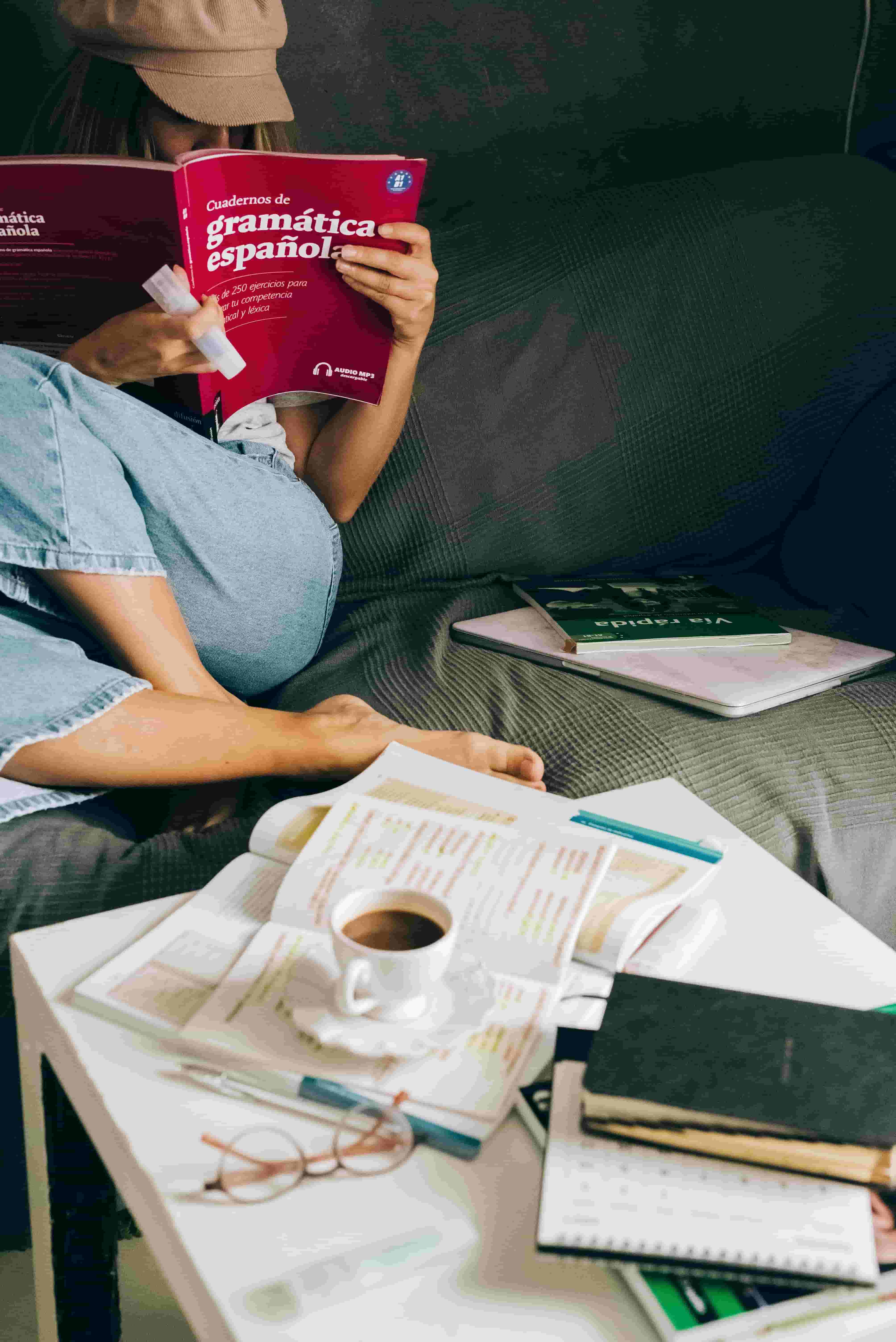
The Difference Between Language Acquisition and Grammar Learning
Linguist Stephen Krashen's theory of language acquisition is the foundation of this topic. Krashen distinguishes two ways of working with a language: acquisition and learning.
Acquisition is how children learn their mother tongue. Nobody explains the rules to them. The child is constantly exposed to speech, listens, tries to speak, and over time starts using correct structures automatically.
Learning is what happens in school. Rules are explained, formulas are given, tests are solved. This method might work on grammar exams, but in a real conversation the brain does not have time to recall the rules.
That is exactly where the problem starts. Even students who work with tutors, including an AI language tutor, freeze when speaking if they only studied grammar. Because the brain cannot switch from analysis mode to fluent speech mode.
Why Memorizing Grammar Falls Short
Let us look at concrete examples of why knowing rules is not enough.
Knowing the Rule Is Not Speaking
You might know the conjugation pattern for the Spanish preterite tense perfectly. But when someone asks "¿Qué hiciste ayer?", your brain first tries to recall the conjugation table, then forms the answer. This process takes seconds and breaks your fluency.
On the other hand, if you have heard and used this structure enough times, the answer "Fui al cine" comes automatically. Without the intermediate step of recalling the formula.
Spanish Has More Exceptions Than You Think
Spanish is full of irregular verbs and exceptions. You learn the regular -ar verb conjugation pattern, then you encounter "estar", "dar", "andar". Every pattern has its exceptions, and memorizing those exceptions takes more effort than memorizing the patterns themselves.
Lack of Context
Grammar textbooks usually offer examples without context. The sentence "Ella ha estado trabajando desde la mañana" makes sense on its own, but to understand when, in what situation, and with what emotion this structure is used, you need real communication experience.
6 Ways to Learn Spanish Without Memorizing Grammar
1. Listen a Lot (Input Hypothesis)
According to Krashen's input hypothesis, comprehensible input is the foundation of language acquisition. You need content that matches your level: you understand most of it, but you also encounter unfamiliar structures.
Great sources for this:
- Podcasts for your level (Coffee Break Spanish, Notes in Spanish)
- Shows and movies with Spanish subtitles
- YouTube channels about your interests in Spanish
- Audiobooks (especially graded readers)
The key point: listening to content you do not understand is useless. Ideally, you should understand 70 to 80 percent of the material. The remaining 20 to 30 percent allows your brain to naturally acquire new structures.
2. Read, But the Right Way
Reading is one of the most effective ways to see grammar structures in context. But level matters here too.
Instead of a book with 10 unknown words per page, choose books you can read fluently:
- Graded readers (level-adapted books)
- Young adult novels in Spanish
- Blogs about your interests
- News sites (like BBC Mundo or El País)
Do not analyze grammar while reading. Just read and get absorbed in the story. Your brain is already recording structures in the background.
3. Practice Speaking (Without Fear of Mistakes)
This is the most critical step. Trying to speak without thinking about grammar rules feels weird at first. But that feeling is a sign that your brain has entered a new learning mode.
Methods for speaking practice:
- Find language exchange partners (apps like Tandem, HelloTalk)
- Join online conversation groups
- Try thinking in Spanish during your daily routine
- Describe your day out loud in Spanish
Making mistakes is a natural part of the process. If you say "Yo sabo" instead of "Yo sé" and someone corrects you, that correction will stick much better than a hundred readings of the rule in a book.
4. Learn Chunks, Not Rules
Memorizing frequently used chunks is much more effective than memorizing grammar rules.
For example, learn the chunk "¿Qué te parece?" as a complete unit. Instead of analyzing why "parecer" is conjugated this way, just use the chunk as is.
Examples of common Spanish chunks:
- "Tengo que" (I have to)
- "Me gusta" (I like)
- "¿Qué tal?" (How is it going?)
- "Acabo de" (I just)
In grammar textbooks, these chunks are scattered across different chapters. But learned as complete units, they are much easier to remember and use.
5. Repeated Exposure (Spaced Exposure)
To acquire a grammar structure, you need to see it in different contexts and at different times. That is why studying the subjunctive once and moving on does not work. You need to encounter this structure across different materials over weeks.
In this process, language learning apps and tools like VocaFlare AI can make things easier. The important thing is to create situations where the same structures appear to you in different forms and at different times.
6. Write, But Freely
Instead of grammar-focused exercises, practice free writing. Keep a journal, write movie reviews, send messages to friends in Spanish.
Do not think about grammar rules while writing. Focus on expressing what you want to say. Over time you will notice your writing becoming more correct naturally. That is the clearest proof that your brain has internalized the grammar structures.
Does This Mean Grammar Is Useless?
No. Grammar is not useless, but the order of priorities is set wrong.
The right approach is this: start acquiring the language through exposure and practice first. Then, turn to grammar resources to resolve the points that cause you trouble. In other words, grammar should be a reference resource, not a starting point.
For example, if you notice you constantly say "Yo sabo" instead of "Yo sé", then it is worth reviewing the irregular verb conjugations. But correcting a structure you are already familiar with is much more effective than studying it from scratch without any context.
Common Mistakes
Mistake 1: Chasing Perfect Grammar
Most fluent speakers make grammar mistakes. Even native Spanish speakers hesitate between "por" and "para". What matters is being able to communicate, not speaking perfectly.
Mistake 2: Trusting Only One Method
Learning Spanish only through shows or only through speaking is possible, but slow. The best results come from students who combine multiple methods. Balance between listening, reading, speaking, and writing.
Mistake 3: Impatience
Natural language acquisition takes time. Memorizing a grammar rule takes an hour. Internalizing that rule takes weeks, sometimes months. The way to speed up this process is through more exposure and practice.
Special Tips for Beginners
If you are just starting with Spanish, learning without memorizing grammar is even more important. Because you are not yet familiar with the language, and a grammar-focused approach in the early stage can kill your motivation fast.
Recommendations for beginner level:
- Start with children's books and cartoons
- Read and listen to simple song lyrics
- Describe your daily routines in Spanish
- Consume Spanish content for at least 15 minutes a day
- Do not be afraid of making mistakes, every mistake is a learning opportunity
AI-powered tools, including an AI language tutor, are especially useful for beginners because they offer materials at the right level. Working with appropriate materials speeds up the natural learning process.
Conclusion
Learning Spanish without memorizing grammar is not only possible, but it is also a more effective and enjoyable path. Your brain is already designed to acquire languages. All you need to do is create the right environment and trust the process.
Listen a lot, read, speak, and write. Instead of obsessing over grammar rules, make the language part of your life. Over time you will notice the rules falling into place automatically.
Remember, the goal is not perfect grammar. The goal is to communicate, express yourself, and connect with the world. And the path to that goal is much broader and more colorful than the pages of a grammar textbook.