How to Learn Spanish from Zero: A Complete Beginner's Guide
A practical step-by-step guide for English speakers who want to learn Spanish from scratch. Covers mindset, resources, daily routine, and the four key skills.
Try the AI tutor for free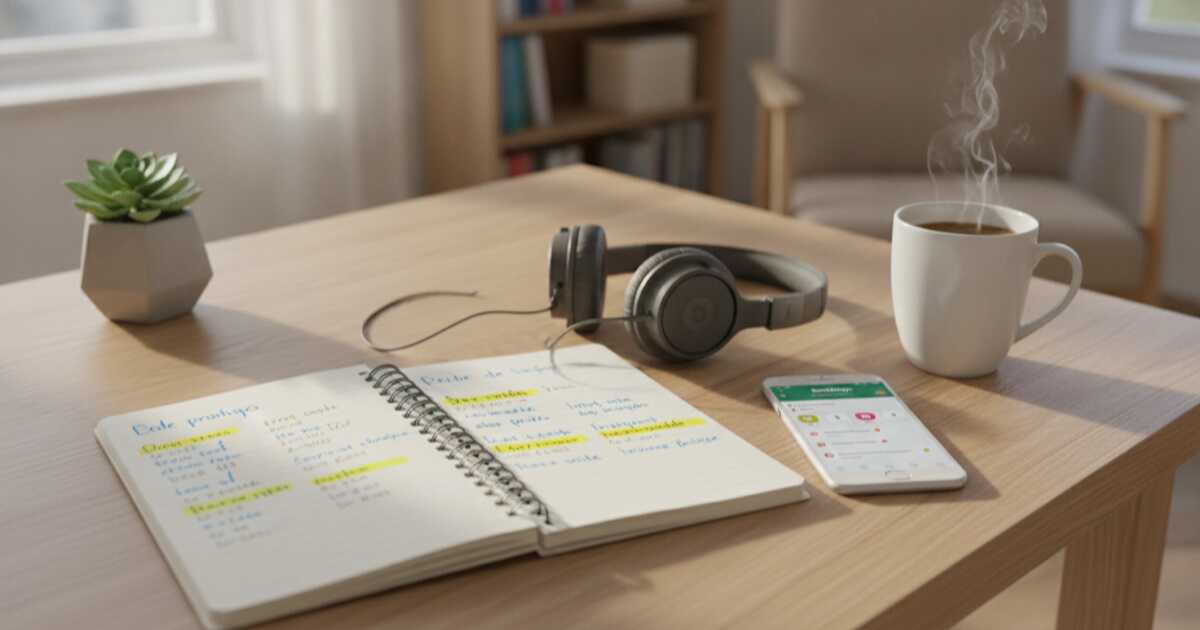
Introduction
So you want to learn Spanish. Maybe you have a trip coming up. Maybe you want to watch Netflix shows without subtitles. Or maybe you just want to pick up a second language and Spanish felt like the right fit. Whatever your reason, you are in the right place.
The problem most beginners face is not lack of motivation. It is not knowing where to start. You open a language app, do a few exercises, hit a wall, and slowly give up. That is not because you are bad at languages. It is because you never had a clear roadmap.
This guide is that roadmap. No fluff, no gimmicks. Just a practical path from absolute zero to having real conversations in Spanish.
Why Spanish Makes Sense for English Speakers
Spanish is one of the easiest languages for English speakers to learn. The US Foreign Service Institute puts it in Category I, meaning it takes about 600 hours of study to reach professional working proficiency. Compare that to Japanese or Arabic, which take over 2000 hours.
The reasons are simple. Spanish and English share thousands of cognates words that look and mean the same thing. Words like "actor," "hospital," "animal," and "normal" are identical in both languages. You already know more Spanish than you think.
Spanish pronunciation is also straightforward. Unlike English, where "through," "rough," and "thought" all sound different, Spanish letters almost always make the same sound. Once you learn the rules, you can read any word out loud correctly.
And then there is the real-world value. Spanish is the second most spoken native language in the world, with over 500 million speakers across 20 countries. From Mexico to Argentina to Spain, you can use Spanish in dozens of countries.
Set the Right Mindset First
Before you buy a single textbook or download an app, fix your mindset. This is the most overlooked step, and it is the one that separates people who succeed from people who quit after two weeks.
You will not learn Spanish in a month. Anyone selling you that is lying. But you can make noticeable progress in a month if you are consistent. The goal is not perfection. The goal is to show up every day.
Embrace being bad at first. You will say things wrong. You will forget basic words. You will conjugate verbs incorrectly. That is normal. Every fluent Spanish speaker went through this. The only way to get good is to be okay with being bad first.
Focus on input before output. Listen to a lot of Spanish before you force yourself to speak. Your brain needs to build a mental model of the language. The more you listen, the more natural the sounds and rhythms become.
What You Actually Need to Start
You do not need a lot to begin. Here is the minimum viable setup:
- A good language app for daily practice (something with spaced repetition)
- A Spanish podcast for beginners
- A notebook for writing down new words and phrases
- A YouTube channel that teaches Spanish for beginners
- Optional but helpful: a language partner or an AI conversation tool
That is it. You do not need five textbooks, a premium subscription to every app, or a tutor from day one. Start small and add tools as you go.
Build a Daily Routine That Sticks
Consistency beats intensity every time. Studying for 20 minutes every day is far more effective than cramming for three hours once a week. Your brain learns languages through repeated exposure, not marathon sessions.
Here is a simple daily routine for your first three months:
10 minutes of vocabulary review. Use an app with spaced repetition. Learn 5 to 10 new words per day. Focus on the most common words first. Studies show that knowing the 1000 most common Spanish words covers about 80 percent of everyday conversations.
10 minutes of listening. Put on a Spanish podcast or a YouTube video made for learners. Do not worry if you understand almost nothing at first. Just let your ears get used to the sounds. Over time, patterns will start to emerge.
5 minutes of reading. Read a simple Spanish text. News in Slow Spanish or childrens books are great options. Look up a few words but do not translate everything. Try to guess meaning from context.
This is only 25 minutes per day. Anyone can find 25 minutes.
Master the Core Grammar Without Overthinking
Spanish grammar is different from English, but it follows consistent rules. You do not need to master all 14 verb tenses to start speaking. Focus on the essentials first.
Start with the present tense. Learn how to conjugate regular -ar, -er, and -ir verbs. Then learn the most common irregular verbs: ser, estar, tener, ir, and hacer. With these, you can already form basic sentences.
Next, learn the two past tenses: preterite and imperfect. Preterite is for completed actions. Imperfect is for ongoing or repeated actions in the past. This is where many learners get stuck, but with enough input, it starts to feel natural.
Fluency does not mean perfect grammar. Native speakers make grammar mistakes too. The goal is to be understood, not to pass a grammar exam.
The Four Skills and How to Practice Each
Language learning has four skills: listening, speaking, reading, and writing. You need all four, but you do not need to work on them equally every day.
Listening. This is the most important skill for beginners. Listen to Spanish every single day. Start with content made for learners (slower, clearer speech). Gradually move to native content like Spanish podcasts, YouTube vlogs, and Netflix shows. The more you listen, the better your accent and comprehension become.

Speaking. You cannot learn to speak without speaking. Find a language partner on apps like HelloTalk or Tandem. Use an AI tool for conversation practice if you are too shy to talk to a real person. Record yourself speaking and listen back. It feels awkward but it works.
Reading. Start with childrens books or graded readers. News websites like BBC Mundo are good for intermediate learners. Read out loud to practice pronunciation. Do not stop to look up every word. If you can understand the general idea, keep going.
Writing. Keep a simple journal in Spanish. Write three sentences about your day. Describe what you see around you. Use an app like LangCorrect to get feedback from native speakers.
Common Mistakes Beginners Make
Trying to be perfect. You will never be ready to speak. The only way to improve is to make mistakes. Perfectionism is the enemy of progress.
Translating everything in your head. When you hear "¿Cómo estás?" do not translate it to "How are you?" and then think about your answer in English before translating back. Train your brain to associate Spanish words directly with meaning.
Skipping listening practice. Many beginners focus only on reading and writing because it feels safer. But if you cannot understand spoken Spanish, you cannot have a real conversation. Listening is non-negotiable.
Using only one resource. Apps like Duolingo are great for vocabulary but terrible for conversation skills. Combine apps with podcasts, videos, and real human interaction.
Giving up after the first plateau. Everyone hits a point where progress feels slow. That is not a sign to quit. It is a sign that your brain is consolidating what you have learned. Push through it.
How to Stay Motivated Long Term
Motivation is not a feeling. It is a system. Here is how to keep going after the initial excitement fades.
Track your streak. Use an app that shows your daily streak. Not because streaks matter, but because they make you think twice before skipping a day.
Measure progress in months, not days. You will not notice improvement from one day to the next. But compare your Spanish today to where you were three months ago. That gap is real progress.
Find content you actually enjoy. If you like cooking, watch Spanish cooking videos. If you like sports, follow Spanish football commentary. If you like music, learn the lyrics to Spanish songs. When learning is fun, you do not need motivation.
Connect with a community. Join a Spanish learning subreddit, a Discord server, or a local language exchange group. Learning alone is harder than learning with other people.

Put It All Together
Here is what your first three months could look like:
Month one. Focus on listening and vocabulary. Use an app for 15 minutes daily. Listen to a beginner podcast for 10 minutes. Learn the present tense. Get comfortable with the sounds of Spanish.
Month two. Add speaking. Record yourself reading short texts. Find a language partner or use an AI conversation tool. Start learning the past tenses. Read childrens stories.
Month three. Increase input. Watch a TV show in Spanish with Spanish subtitles. Write a short paragraph about your day. Start thinking in Spanish during simple tasks like making coffee or walking the dog.
By month three, you should be able to hold a simple conversation about familiar topics. That is real progress.
Conclusion
Learning Spanish from zero is not easy, but it is simpler than most people think. The formula is consistent daily exposure, a focus on listening, and a willingness to make mistakes. You do not need talent. You just need a system and the discipline to follow it for a few months.
Start today. Do not wait until you find the perfect method or the perfect app. The best time to start learning Spanish was a year ago. The second best time is right now.
¡Buena suerte!