Manifest TRALALA Lyrics Meaning: What the Song Is About and the English Slang Inside
What do Turkish girl group Manifest's TRALALA lyrics mean? The story verse by verse, what Mashallah means, and the English slang inside, from pull up to on the daily.
Try the AI tutor for freeWhat Is TRALALA About? The Short Answer
TRALALA is sung from the point of view of a very confident girl. Someone who is already in a relationship cannot stop staring at her; she knows it, takes her time and builds the tension on purpose. Meanwhile she enjoys messing with his nervous girlfriend.
So this is less a love song and more a cheeky flirting anthem. And the "tralala" part means nothing; it is a vocal hook, the pop version of "la la la."
Manifest released TRALALA on October 9, 2026, as the Turkish girl group's first song in English. Watch the official video here:
You can read the full lyrics on Genius. This guide explains what they mean and the English phrases inside.
Who Is Manifest?
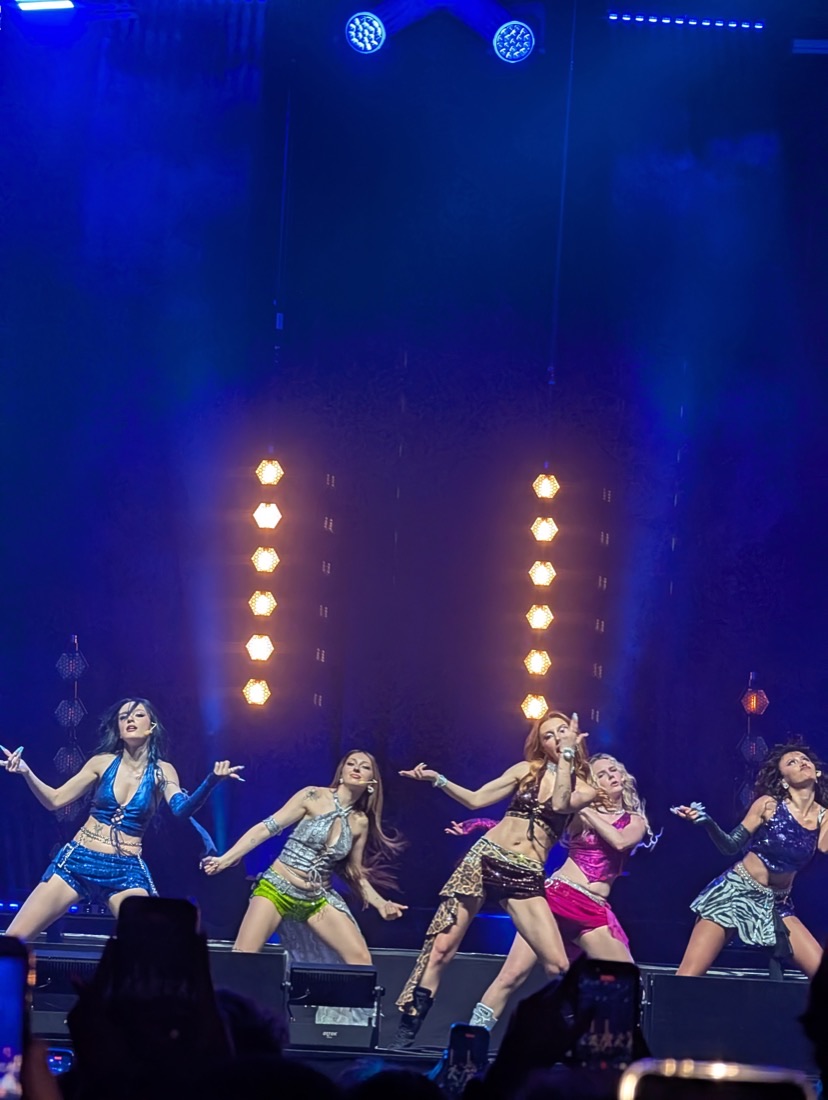
Manifest is a six-member Turkish girl group: Esin Bahat, Hilal Yelekçi, Lidya Pınar, Mina Solak, Sueda Uluca and Zeynep Sude Oktay. All six came out of the Big5 Türkiye singing competition and trained together in singing and K-pop-style choreography before debuting in early 2025.
At home they moved fast. Their first single "Zamansızdık" racked up millions of streams within months. Their debut album Manifestival went to number one in Turkey, and they launched a two-day festival under the same name. Later singles, including "Hileli" with Turkish pop legend Ajda Pekkan and "Toz Pembe," topped the Turkish charts too.
The group names Spice Girls and Little Mix as inspirations, and their fanbase goes by Manifam. TRALALA is the first step outside Turkey.
TRALALA at a Glance
- Released: October 9, 2026
- Label: Hypers Music
- Written by: a team including INJI and Alex Graf
- Produced by: Elber Tutkus and Özcan Sayın
- Music video: directed by Yeeiid, shot in London
- First live performance: OVO Arena Wembley, London, October 16
The sound is glossy, upbeat pop with touches of traditional Turkish music woven in. The video follows the same idea: six young women on London streets, with Turkish tea, evil eye charms and the word "Maşallah" popping up throughout.
The members have said they were hooked by the song's energy the first time they heard it, and that a track only becomes a real Manifest song once they start singing it. For the video, the goal was to show who they are: fun, confident and full of energy.
TRALALA Lyrics Meaning, Section by Section
- Intro and chorus: The other person cannot take their eyes off her. She answers with compliments like "angel" and a "Mashallah," which is praise and a blessing against the evil eye at the same time.
- Verse 1: She treats it like a game. With phrases like "law of attraction," "play by play" and "build up tension," she makes it clear she is in no hurry and has a plan.
- Pre-chorus: The looks go both ways. She knows his eyes are "all over" her and that he cannot "look away."
- Verse 2: His girlfriend looks nervous. The narrator enjoys "messing with" her, talks about starting a fight, and says it happens "on the daily."
- Verse 3: Friend groups pass information along, both sides end up "pulling up" to the same club, and she sarcastically calls it a "coincidence." The girlfriend's confidence takes a hit, and the narrator is not sorry.
What Does Mashallah Mean in TRALALA?
The detail everyone talks about is the "Maşallah" (often written Mashallah) in the middle of an English pop song. The members have said their favorite line in the song is the one with this word.
In Turkish, Maşallah is said to express admiration and, at the same time, to protect what you admire from envy or the "evil eye." Complimenting someone and adding Maşallah right after is like saying "you look amazing, and may nothing spoil it." That is exactly how the song uses it: right after a compliment.
The evil eye charms in the video carry the same idea. The blue glass bead, called nazar boncuğu in Turkish, is everywhere in Turkey: on doors, in cars, on baby clothes. If you are learning Turkish, Maşallah is one of the first words you will hear in real life, at weddings, about babies, about a new car.
Is TRALALA Catty? The Criticism
Not everyone loves the story. Some fans online have called the lyrics catty, mostly because of the verses about provoking someone else's partner and enjoying their insecurity.
It is a fair reading. The narrator is not a hero here, and the song does not pretend otherwise. But this kind of confident, slightly villainous character has a long history in pop, from girl groups to solo divas. Read it as a role the group is playing for three minutes, not as advice, and it lands as cheeky rather than cruel.
For English learners, this debate is useful too. Words like "catty" (spiteful toward other women, usually in a sneaky way) and "petty" (caring too much about small things, often out of jealousy) show up all the time in reviews and comment sections.
English Slang and Phrases in TRALALA
TRALALA is packed with casual, spoken English. These are expressions you will rarely find in a textbook but hear constantly in shows, on social media and in everyday conversation.
Law of attraction
The belief that thinking about something positively draws it into your life. In the song, it describes an irresistible pull between two people.
Example: "We keep running into each other. Law of attraction, I guess."
Play by play
From sports commentary, where a commentator describes a game moment by moment. In everyday English it means "step by step, with every detail."
Example: "Tell me what happened, play by play."
Build up tension
To increase suspense or pressure little by little. Works for movies, sports and flirting alike.
Example: "The first episode builds up tension really slowly."
Pull up
Slang for arriving somewhere. It started with cars (pulling up to the curb) but now covers any kind of showing up.
Example: "We're pulling up to the party in ten minutes."
On the daily
A casual way to say "every day," common in music and online.
Example: "I listen to this song on the daily."
Mess with someone
To tease, annoy or play games with someone. It can be friendly or not.
Example: "Stop messing with her, she's already nervous."
Start a fight
To cause an argument or conflict. In TRALALA it comes up in the part about provoking the partner.
Example: "I didn't come here to start a fight."
Calm down
To become calm, or to tell someone to relax. The song uses it with an ironic, teasing tone.
Example: "Calm down, it's not that deep."
Look away
To stop looking at something. It shows up in the pre-chorus: he simply cannot look away from her.
Example: "It was so awkward, but I couldn't look away."
All over you
An intensifier meaning "focused entirely on you" or "everywhere on you," often about attention or eyes.
Example: "Everyone's eyes were all over you when you walked in."
Coincidence
Two things happening together by chance. TRALALA uses it sarcastically about the club run-in, which was clearly planned. You can see more example sentences and the pronunciation on our coincidence meaning page.
Example: "What a coincidence, I was just talking about you!"
Can You Really Learn English From Songs?
Yes, if you do more than just press play. Songs train your ear to real speech rhythm, and melody makes phrases stick. Once you have learned "pull up" or "on the daily" through a chorus, you are not going to forget it.
The difference comes from three steps:
- Listen once without the lyrics. Note how much you catch.
- Listen again with the lyrics. Mark every phrase you do not know and look it up, like the list above.
- Use the phrase in your own sentence. Say something true about your life with "on the daily." This is where learning actually happens.
The same method works with TV shows and movies. If you want to pick up vocabulary from real video scenes, take a look at our word clips. For more internet and street expressions, our social media and street slang guide is a good next read.
Step three is the one most people skip. Recognizing a phrase is easy; using it while you speak is hard. That takes saying things out loud, ideally in a real conversation, and AI voice conversation apps such as VocaFlare AI exist to fill exactly that gap.

Wembley and Manifest's Global Plans
TRALALA is Manifest's opening move on the international stage. The group performs it live for the first time on October 16 at OVO Arena Wembley in London, their first international arena show.
The members describe this moment as the beginning of a new chapter, and their goal is clear: bring pieces of their own culture into international pop. An English song that keeps a Maşallah in the chorus is the most direct version of that idea.
For non-Turkish fans, it is also a small doorway into the language. A song, a word, a blessing; that is often how learning a new language starts.
FAQ
What does "tralala" mean?
Nothing specific. "Tralala" is a nonsense vocal sound used in songs to fill a melody and create a catchy hook, similar to "la la la."
Is tralala the same as "tralalero tralala"?
No. "Tralalero tralala" is an Italian internet meme built around AI-generated characters. It has nothing to do with Manifest's song; they just sound alike.
Is TRALALA in English or Turkish?
The song is in English. The only Turkish word is Maşallah, an expression of admiration that also wards off the evil eye.
When was TRALALA released?
October 9, 2026, on Hypers Music.
Is TRALALA Manifest's first English song?
Yes. All of the group's earlier releases were in Turkish.
Where was the TRALALA music video filmed?
In London. It was directed by Yeeiid and features Turkish tea, evil eye charms and the word Maşallah.
Final Thoughts
On the surface, TRALALA is a catchy pop song. Underneath, it is a confident flirting story, an ironic game of "coincidences," and a Turkish blessing dropped into an English chorus.
Next time you hear "pull up," "on the daily" or "look away" in the song, you will know exactly what is being said. Take it one step further and use one of those phrases in a sentence today. That is how a song turns into real English.