Vocabulary Games: Why Learning Words by Playing Actually Sticks
Vocabulary games are not a break from studying English vocabulary; they train a skill flashcards never touch. How games for vocabulary work, what they cannot do, and how to combine both.
Try the AI tutor for freeWhy Vocabulary Study Falls Apart Around Day Nine
You know the pattern. Monday you install something, set a goal of twenty new words a day, and feel unstoppable. By the second week the review queue has grown to four hundred cards, the daily session takes twenty five minutes, and the whole thing quietly turns into unpaid homework. By day nine you skip once. By day twelve the app is a red badge you scroll past.
Read enough progress reports from people who actually reached a high level in a language and you find the same confession buried in the middle: the vocabulary phase was the part they nearly quit. Not grammar, not pronunciation. The daily grind of turning cards over.
Flashcards are not the villain here. They are extremely good at one job, which is pushing a word into long term memory and keeping it there. The problem is that this job is quiet, slow and solitary, and human motivation was never built for quiet, slow, solitary work that pays off in three months.
That gap is exactly where vocabulary games earn their place. Not as a treat for finishing the real work, and not as a shortcut around it. They train something the calm review session never touches.
Recognition Speed Is a Separate Skill
Here is what most study plans miss. Knowing a word and recognizing a word at conversation speed are two different abilities.
A native speaker talking normally produces somewhere between 150 and 190 words a minute. That leaves you a fraction of a second per word. If pulling up the meaning of "reluctant" takes you two seconds, the sentence has already moved on without you, and you spend the rest of it playing catch up instead of listening.
Psychologists call the target state automaticity: retrieval that happens without conscious effort, fast enough that the meaning arrives before you notice looking for it. Getting there requires repeated retrieval under time pressure, which is precisely what an untimed review session avoids.
Sitting with a flashcard, you dig. You look at the word, you feel it coming, eventually it surfaces, and you mark it correct. That is genuinely useful for encoding. It does nothing for speed, because you were never forced to be fast.
A game inverts the constraint. It puts a clock on the exact moment of recognition and makes hesitation cost something. Hesitation is the thing you are trying to remove, so making it expensive is not a gimmick; it is the training effect.

What Games for Vocabulary Actually Train
It helps to be specific about the mechanism instead of trusting the word "gamification", which by now mostly means confetti animations bolted onto a quiz.
A well built vocabulary game gives you four things:
Speed under pressure. Every decision has a deadline, so you practice the retrieval condition you will face in a real conversation rather than the comfortable one.
Volume. A four minute round can put a hundred or more meaning decisions in front of you. A careful review session of the same length might cover fifteen cards.
Interference tolerance. The wrong options are not random noise. Near synonyms and words that look similar force you to separate meanings you had filed together as roughly the same thing.
A memory hook on your mistakes. Missing a word in front of a friend, one second before the finish line, marks that word in a way no highlighter can. Mild stress at the moment of error is one of the more reliable things memory research has found.
And here is the equally important half, because a games article that pretends otherwise is selling something. Games do not teach a word you have never seen. They do not teach collocation, register, or how the word behaves in a sentence you have to build yourself. They do not train production, which is the part that decides whether you can actually speak.
So the honest framing is that games are the sprint work and spaced review is the base training. Anyone who does only one of them plateaus, just in different ways. The learner who only reviews knows a lot of words slowly. The learner who only plays recognizes a lot of words they cannot use.
Why Playing With Friends Changes the Numbers
The strongest argument for vocabulary games has almost nothing to do with the words.
Solo study fails on adherence, not on method. You know spaced repetition works. You still skipped Tuesday. Adding another person changes the equation in ways that a streak counter never manages:
- You show up because someone is waiting, and standing up a friend costs more socially than breaking a streak costs emotionally.
- Losing by one word is a better memory hook than any mnemonic you could design. You will remember that word specifically because of how you lost it.
- Arguing about a word afterwards is free repetition, out loud, with attention on meaning. The same principle makes playing games with a friend work in analog form.
- Nobody negotiates with themselves about whether tonight counts. The session either happened or it did not.
Same words, same second
For competition to mean anything, the comparison has to be fair. That means everyone in the round sees the same words in the same order at the same moment, on a countdown that ends simultaneously for all of them. Otherwise the ranking is measuring luck of the draw, and everyone knows it, and the whole thing deflates within two rounds.
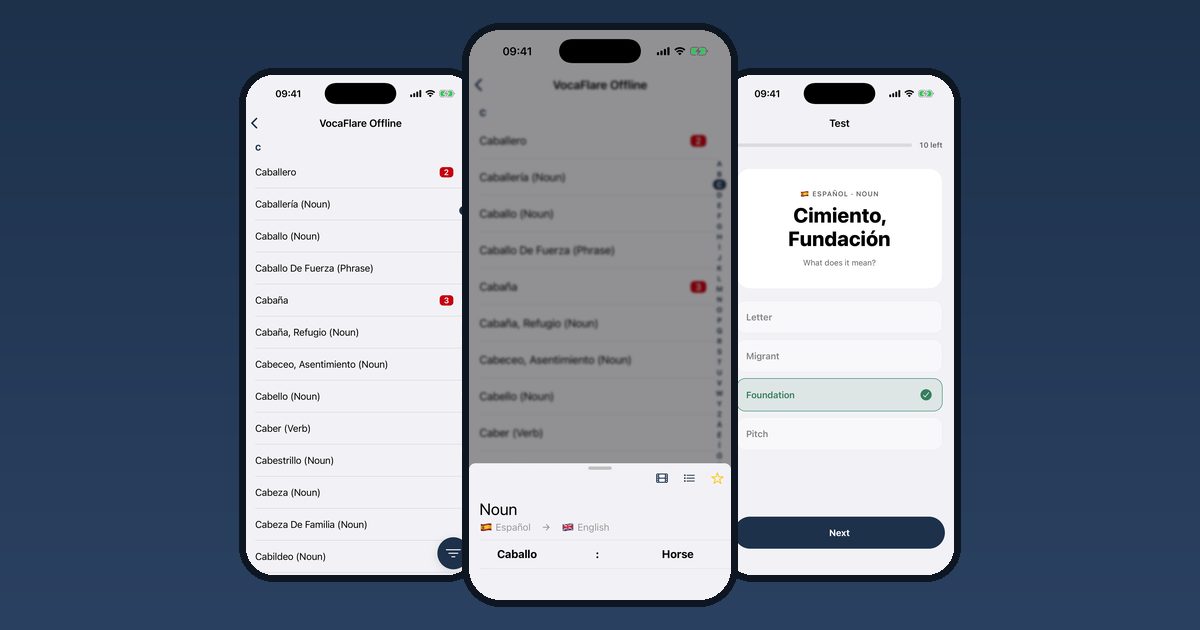
It also has to be easy to get people in. Friend requests, usernames and mutual follows kill more game nights than boredom does. A six character lobby code or a shared invite link removes that entirely: one person creates the room, everyone else types six characters, two players is already enough to start. Some apps now build word games you can play with friends directly around that shared lobby idea, and VocaFlare AI is one example of that approach.

Playing alone still has to work
Some nights nobody is around, and a game that only exists in multiplayer becomes a game you play twice. Solo mode matters for the same reason a gym needs to be open at seven in the morning. The good version of solo is not a stripped down demo: same word pool matched to your level, same clock, same scoring, just without the ranking screen at the end.
Two Game Shapes That Fit Vocabulary Well
Most vocabulary games online are quizzes with a timer painted on. A few use the shape of the game itself to train something. Two shapes are worth describing in detail, because the mechanics explain why they work.
The gate game
Your runner moves forward on its own, so there is nothing to control except direction. A meaning appears on screen and two gates come toward you, each carrying a candidate word. You steer into the one you believe is correct.
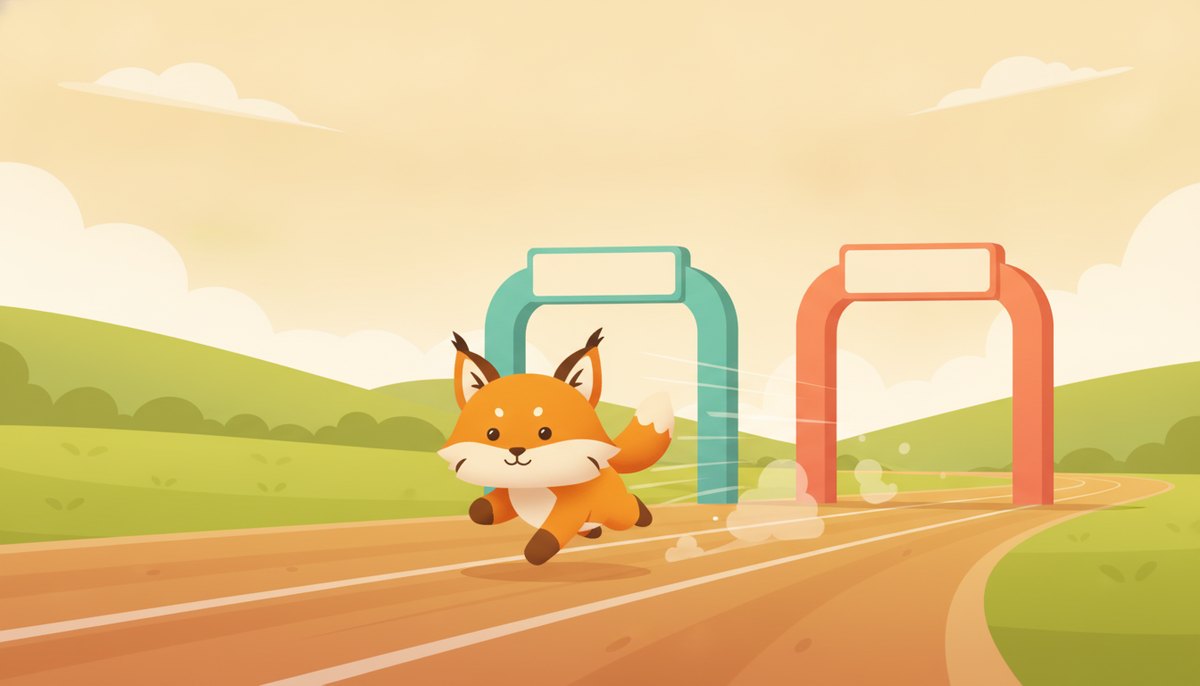
The right gate speeds you up, and a run of correct gates unlocks a turbo burst, so a streak compounds instead of just incrementing a counter. A wrong gate tumbles you and costs you speed. You are not eliminated and you lose no lives; you simply fall behind, which keeps a weaker player in the round instead of watching from a death screen.
When the first person crosses the line, the round does not end for everybody. The rest get a ten second countdown and still finish ranked. That single rule is what makes it playable between a B1 and a C1 friend without one of them quietly deciding never again.
The reason this shape trains recognition well is that the only decision available to you is meaning. There is no aiming skill, no reflex ceiling, no inventory. Fast hands do not save you if you do not know the word.
The slicing game
Words fly up into the air and you slice the correct one with your finger. Leaving the wrong ones alone matters as much as hitting the right one.
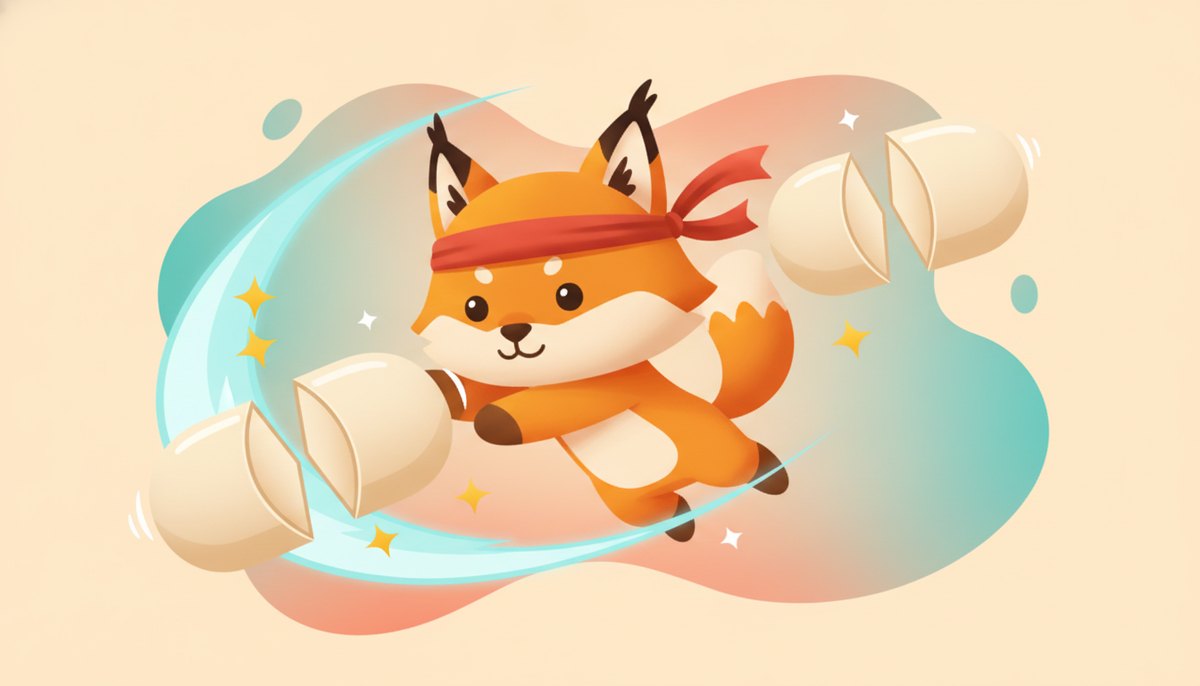
Every correct slice in a row grows your combo and every slice inside that combo is worth more, so consistency beats frantic swiping. A wrong slice resets the combo to zero, and two wrong slices cost you more than a single correct slice earns back. Rounds run for a fixed length, so your rank comes from points collected, not from finishing first.
What this shape adds is inhibition. Recognizing the right word is only half of vocabulary knowledge; the other half is confidently not choosing the near miss. A game that punishes reckless swiping trains you to hold back on the word that merely looks familiar, which is exactly the error that shows up in exams and in real sentences.
A Week That Uses Both
A workable routine mixes the two modes instead of choosing between them:
- Monday, Wednesday, Friday: fifteen minutes of flashcard review with spaced repetition in the morning, when your attention is fresh and encoding is the goal.
- Tuesday and Thursday: two or three game rounds in the evening, ten minutes total. This is speed work on words you have already met.
- One night a week: a lobby with friends. Longer, louder, less efficient per minute, and the session you are most likely to actually keep.
- Saturday: five minutes reviewing only the words you missed during the week. This is the step almost everyone skips, and it is where the games turn into learning.
Total commitment is under two hours a week. The point is not intensity; it is that every part of it survives a bad mood.

Mistakes That Make Vocabulary Games Useless
Playing far above your level. If most of the words are new, you are guessing, and guessing trains nothing. Words should sit slightly above comfortable, not in unknown territory.
Treating the score as progress. A high score means you were fast on words you already knew. Progress is the miss list shrinking.
Never revisiting the misses. The words you got wrong under pressure are the most valuable list you will generate all week, and they are worthless if you close the app on the results screen.
Playing instead of speaking. Recognition is input side. If you never produce the word in a sentence you built yourself, it stays a word you understand and never becomes a word you use.
Marathon sessions. Twenty minutes of timed play is exhausting in a way that fifteen minutes of review is not. Short rounds, often, beats one long grind on Sunday.
Questions People Ask About Vocabulary Games
Do vocabulary games work for adults, or are they for kids?
They work for adults, for a reason that has nothing to do with age. Timed retrieval practice improves recall speed at every age, and adults are the ones most likely to abandon a solitary study routine because of a busy week. The childish part of most games is the visual style, not the mechanism.
Are free vocabulary games good enough?
For recognition speed, usually yes. What free versions tend to lack is level matching and a record of what you missed, which is the part that converts play into learning. A game with no memory of your errors is entertainment that happens to use words.
How long should I play in one session?
Ten to fifteen minutes. Timed play burns attention fast, and accuracy drops noticeably after that point, which means you start reinforcing errors rather than removing them.
Can games replace flashcards entirely?
No. Games sharpen access to words you have already encountered; spaced repetition is what puts them there and keeps them there. Replacing review with play produces fast recognition of a small stock of words and a plateau nobody can explain.
Play Fast, Review Slow
English vocabulary is not one skill with one method. Storing a word and reaching it in half a second are separate problems, and the tools that solve them look nothing alike. Review sessions are quiet, patient and boring on purpose. Games are loud, fast and slightly unfair, and that is also on purpose.
Use both and the weaknesses cancel out. Review builds the stock, play makes it reachable, and the friend on the other end of the lobby code makes sure you keep showing up long enough for either one to matter.
Pick one game shape, play three rounds tonight, and write down every word you missed. That list is your next study session, and you did not have to force yourself to generate it.