What Reddit Recommends Instead of Duolingo (2026 Roundup)
Reddit threads name the same handful of apps every time someone quits Duolingo. Here is what Anki, Memrise, Busuu, Babbel, Pimsleur and VocaFlare are actually good at, and which one fills the speaking gap.
A post that keeps circling language learning subreddits goes roughly like this: someone has a 341 day streak, sits through a family dinner in their target language, and says nothing for five hours. The comments fill up with the same story in different accents. Ten year veterans posting reviews. A subreddit literally called r/LeavingDuolingo. Threads titled "After 1,000 days, I'm done."
The interesting part is not the complaining. It is that the replies always converge on the same short list of apps, and almost nobody explains why that list works. So here is the list, plus the reasoning underneath it.
Short answer: Anki for vocabulary, Memrise for listening, VocaFlare AI for speaking. Long answer, with the reasoning, below.
What People Who Quit Duolingo Say on Reddit
Read fifty of these threads and four patterns show up over and over.
The streak becomes the goal. People describe opening the app at 11:58pm to tap through a lesson they already know. The habit survives; the learning quietly stops.
Real conversation sits behind the top tier. AI conversation features exist but are limited to a handful of languages and the expensive plan, so most users never touch open ended speaking at all.
The mini games feel like filler. "These games are dumb and feel like a massive waste of time" is a real post title with hundreds of upvotes. "Duolingo is too childish now" is another.
Output never happens. This is the big one. Users tap, match, and select. They rarely produce a sentence nobody handed them first. That gap is exactly why so many learners understand everything and still freeze when they have to speak.
The Apps Reddit Names Most Often
Anki
The most recommended tool in every thread, and the least pleasant to start. It is a spaced repetition flashcard engine, free on desktop and Android, and it does one job better than anything else: making sure a word you met once is still there in six months.
Good at: long term vocabulary retention, exam prep, total control over your cards.
Not good at: everything else. There is no course, no syllabus, and the interface looks like 2008. Reddit's own advice is to use shared decks at first rather than building 3,000 cards by hand.
Memrise
The friendlier cousin of Anki, with video clips of native speakers saying each phrase at natural speed. The clips are the reason people recommend it; hearing twelve different people say the same sentence trains your ear far faster than one studio voice.
Good at: vocabulary with real pronunciation, listening warmups.
Not good at: grammar explanations, structured progression past the intermediate wall. The clips train your ear, but nothing on the other side answers you; Memrise next to VocaFlare breaks that difference down.
Busuu
A proper course structure with one distinctive feature: written and spoken exercises get corrected by native speakers in the community, and you correct theirs in return.
Good at: getting human feedback on output without paying for a tutor.
Not good at: speed. Corrections arrive when someone feels like it, and quality varies from excellent to one word replies. If you want the correction in the moment instead of whenever somebody volunteers, Busuu compared with VocaFlare covers it.
Babbel
The most course-like of the group, built around practical dialogue for adults, with grammar actually explained instead of guessed. Lessons run ten to fifteen minutes and assume you want to use the language for work or travel.
Good at: beginners who want structure and explanations, European languages.
Not good at: breadth of language selection, and the price sits well above the free tier crowd. If you want that kind of structure without the price tag, look at Babbel next to VocaFlare.
LingoDeer
The specialist pick. Built for Japanese, Korean and Mandarin, where a Latin alphabet course design simply falls apart. Reddit recommends it constantly in the Asian language subreddits and rarely anywhere else.
Good at: writing systems, grammar notes that respect how the language actually works.
Not good at: being your only tool past the beginner stage.
Pimsleur
Audio only, thirty minutes a day, all recall and no reading. You hear a prompt, you say the answer out loud, you get corrected. The method is fifty years old and still the fastest route to a mouth that can form sentences while walking or driving.
Good at: pronunciation, automatic recall, hands free practice.
Not good at: vocabulary volume, reading and writing, price per hour. The recording is also fixed: whatever you say, the lesson continues from the same place. Pimsleur compared with VocaFlare is about fixed audio versus a live reply.
Lingonaut
The newest name in these threads, an entirely free community built project that appeared as people looked for a non commercial option. Worth watching, still early, and thin in most language pairs.
Good at: costing nothing, no dark patterns.
Not good at: depth and course completeness, for now.
italki and Preply
Not apps so much as marketplaces for human tutors, usually priced per hour. Every serious thread ends here eventually, because a real person is still the gold standard for conversation.
Good at: unlimited real speaking, accountability, corrections tuned to you.
Not good at: cost and scheduling. Most learners can afford one or two sessions a week, which leaves five days to fill. For the five days left over, see italki next to VocaFlare and Preply next to VocaFlare.
VocaFlare AI
It gives away the one thing none of the eight above give away: open ended speaking. VocaFlare is not a lesson tree. You talk out loud with an AI tutor, you pick the topic, and nothing walks you through a script. Basic speaking practice is free in 50+ languages.
You set how hard the corrections land: Gentle, Balanced or Strict. You pick one of six tutor personalities, Voca, Sophia, Mateo, Yuki, Camille or Emre, each with its own voice and accent. On days when nothing comes to mind there are roleplay scenarios and audio stories. When you want a human on the other side, practice rooms match you with someone near your level, Voca moderates, and the session ends with corrections and words to review.
Strong at: speaking that stays in the free tier, feedback you can tune, and keeping flashcards and the level test inside the same app.
Weak at: there is no numbered path holding your hand. You decide what to work on today, which is a real downside if you want the app to tell you what to do.
For the line by line version, VocaFlare compared with Duolingo was written for exactly that.
Quick Comparison
| Tool | Free tier | Speaking practice | Best for |
|---|---|---|---|
| Anki | Yes (iOS paid) | None | Vocabulary that sticks |
| Memrise | Limited | Repeat after clips | Listening and pronunciation |
| Busuu | Limited | Community corrections | Feedback on output |
| Babbel | Trial only | Scripted dialogue | Structured beginner course |
| LingoDeer | Limited | Scripted dialogue | Japanese, Korean, Mandarin |
| Pimsleur | Trial only | Constant, audio only | Recall and accent |
| Lingonaut | Yes, fully | Minimal | Free and ad free study |
| italki / Preply | No | Real conversation | Unlimited speaking, at a price |
| VocaFlare AI | Yes | Open ended, spoken | Starting to speak this week |
The Pattern Behind Every Good Answer
Sort that table by what each tool asks of you and something obvious appears. The tools Reddit keeps recommending are the ones that make you produce something: a recalled word, a spoken sentence, a written paragraph somebody will correct. The tools people quit are the ones where the app produces and you approve.
This is also why app hopping fails. Swapping one tapping app for another tapping app changes the mascot, not the method. The learner who finally breaks through is usually the one who added speaking, not the one who found a better lesson tree.
Reddit's honest version of this advice is blunt: "I was forced to speak in a foreign language, it works better than any apps." Every plan below is just an attempt to manufacture that pressure on purpose.
VocaFlare is built against that test. The first thing the app asks for is not a tap, it is your voice: the tutor waits, and nothing on screen moves until you answer. It is also why the number we put in front of you is minutes spoken rather than days in a row.
How to Replace Duolingo Without Starting Over
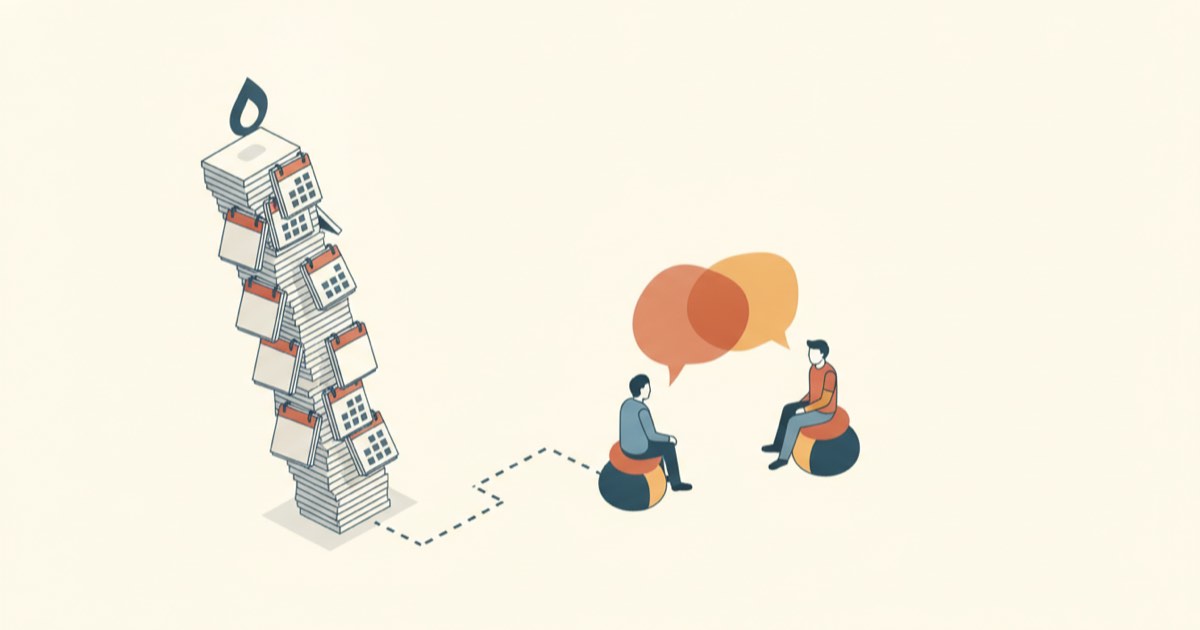
You do not need a new app. You need three slots filled, and most people only ever fill the first.
Slot one, vocabulary. Anki or Memrise, ten minutes, same time every day. Shared deck, not a handmade one.
Slot two, input. Anything you would consume anyway in your target language, with subtitles in that language rather than your own. Twenty minutes.
Slot three, output. This is the slot Duolingo never filled. A tutor session, a language exchange partner, or an AI conversation app that lets you talk about whatever you want instead of walking you through a script. VocaFlare exists for this slot: pick a tutor, open your own topic, set how strict the corrections are, and spend fifteen minutes only speaking. On days you want a human, move to a practice room; on days nothing comes to mind, take a roleplay scenario. The line by line comparison with Duolingo is here.
Fifteen minutes in slot three beats an hour in slot one. If you only have twenty minutes a day total, spend twelve of them talking.
One practical note before you rebuild anything: check your actual CEFR level first. Half the people who feel stuck after two years of streaks discover they are a solid A2 who has never spoken, not a failed B1.

Common Questions
Is Duolingo enough to become fluent?
On its own, no, and the company has never really claimed otherwise. It is a vocabulary and habit tool. Fluency requires producing language under time pressure with a human or a system that responds to what you actually said.
Is there a completely free replacement?
Anki on desktop and Android, plus Lingonaut, plus a language exchange partner, costs nothing. The tradeoff is setup effort and patchy structure.
Is there a free way to cover the speaking slot?
Yes. VocaFlare's core features do not ask for a subscription: spoken practice with an AI tutor, flashcards and the level test all sit in the free tier.
Duolingo has AI conversation now, so why VocaFlare?
Duolingo keeps its AI video calls behind the Max plan and in roughly seven languages, and the conversation mostly follows a script. VocaFlare puts open ended speaking in the free tier across 50+ languages, with the topic chosen by you. The price and feature table is on the comparison page.
Should I keep my streak while I switch?
Keep it if it costs you two minutes and genuinely lifts your mood. Drop it the moment you notice yourself tapping through lessons you already know just to protect a number. The number is not the skill.
How long before I can hold a conversation?
With daily speaking practice from a genuine A2 base, most learners manage a clumsy but real ten minute conversation within two to three months. Without speaking practice, the answer is that it does not happen, which is what those dinner table threads are really about.
Where to Start This Week
Pick one vocabulary tool from the list and stop shopping. Then book, schedule or open something that forces you to speak within the next three days, while the motivation from reading threads like these is still warm.
The shortest version of that: open VocaFlare, pick a tutor, and speak for ten minutes today. The free tier is enough for it, and the only thing it asks of you is to build the sentence yourself.
The people posting ten year retrospectives are not warning you off apps. They are warning you off the comfortable part of learning, the part where you tap a button and something turns green. The uncomfortable part is where the progress lives.